


In The News

“Welcome Back! #TURNITPINK!”
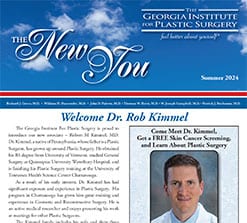
“Welcome Dr. Rob Kimmel”
The Georgia Institute For Plastic Surgery is proud to
introduce our new associate – Robert M Kimmel, MD.
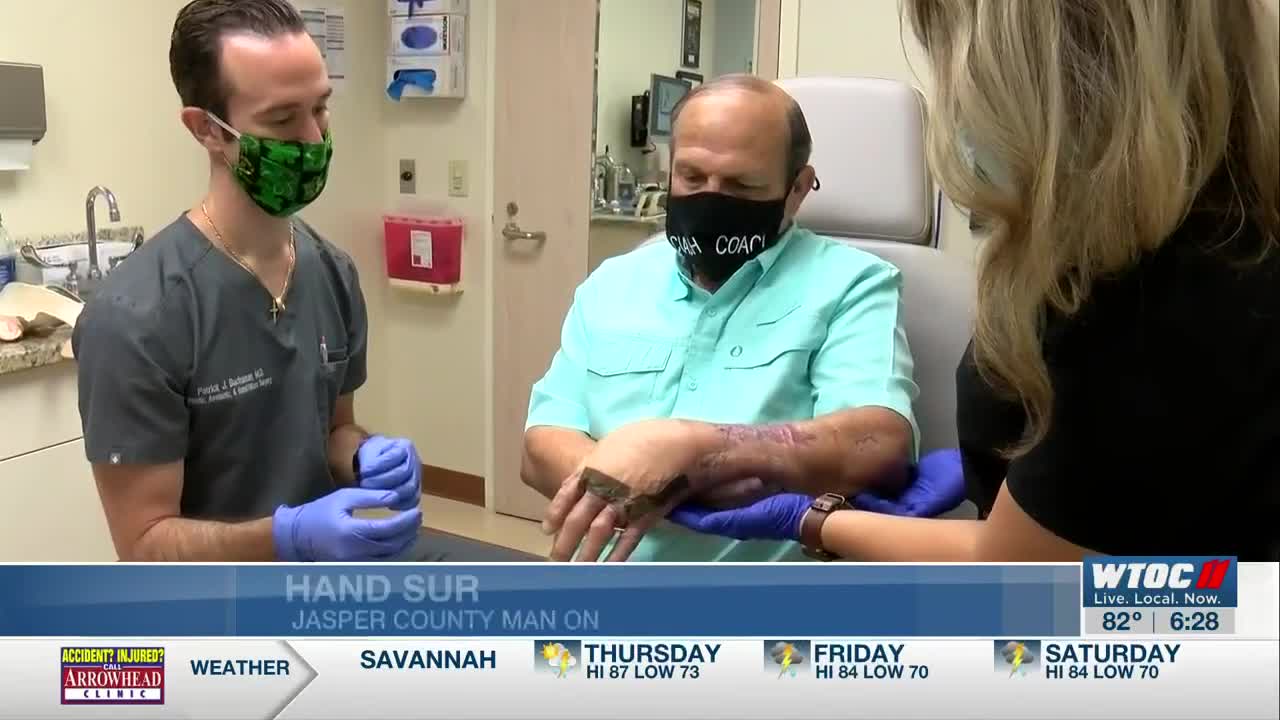
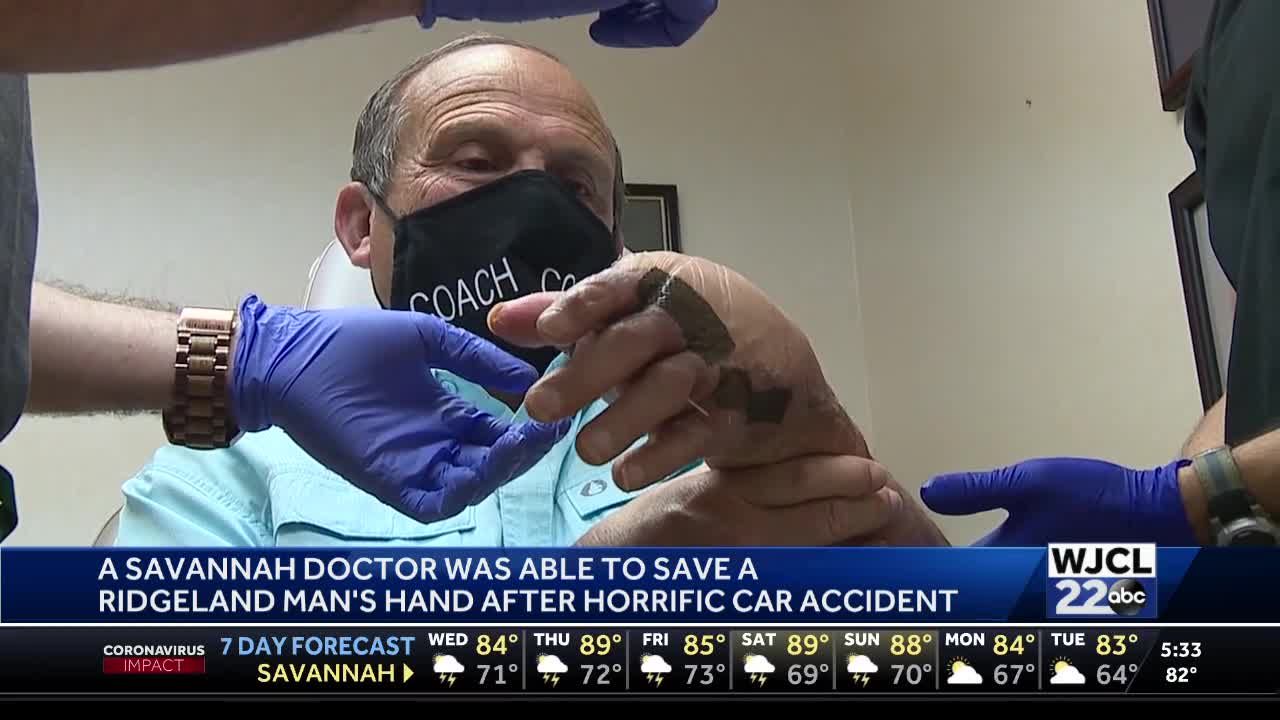
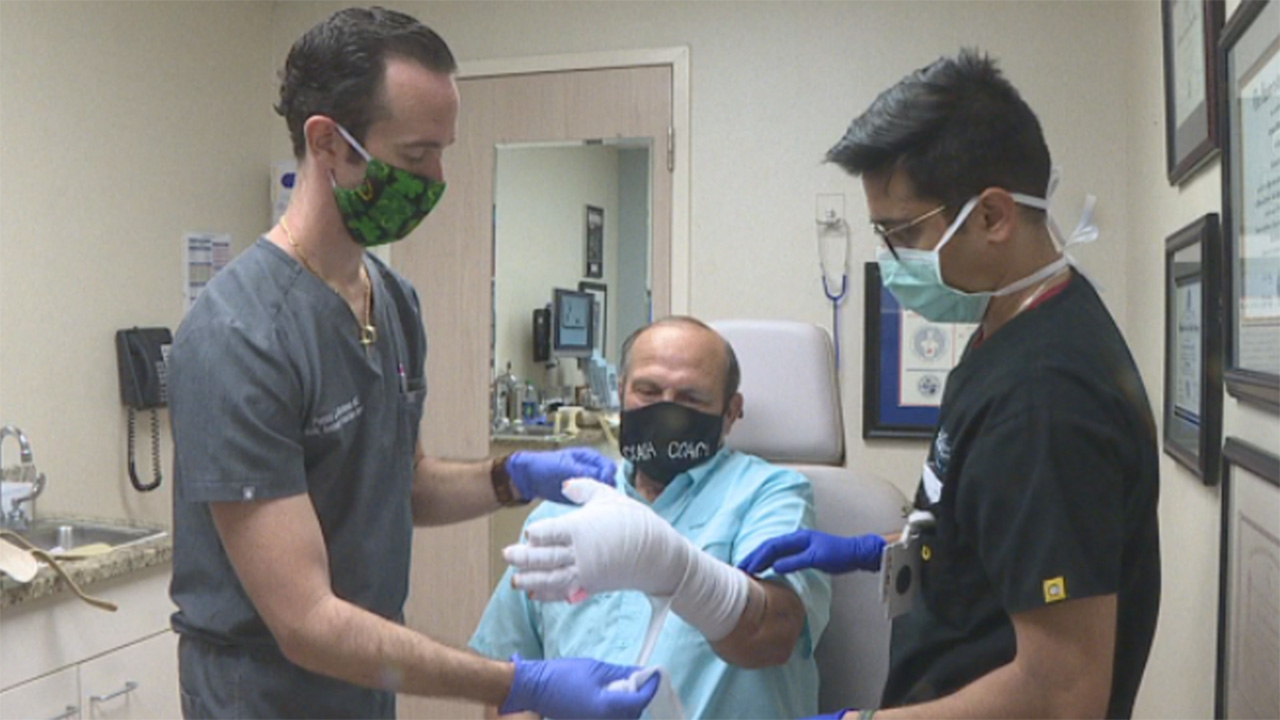
Dr. Buchanan – Savannah area doctor saves Ridgeland man’s hand after tragic car crash
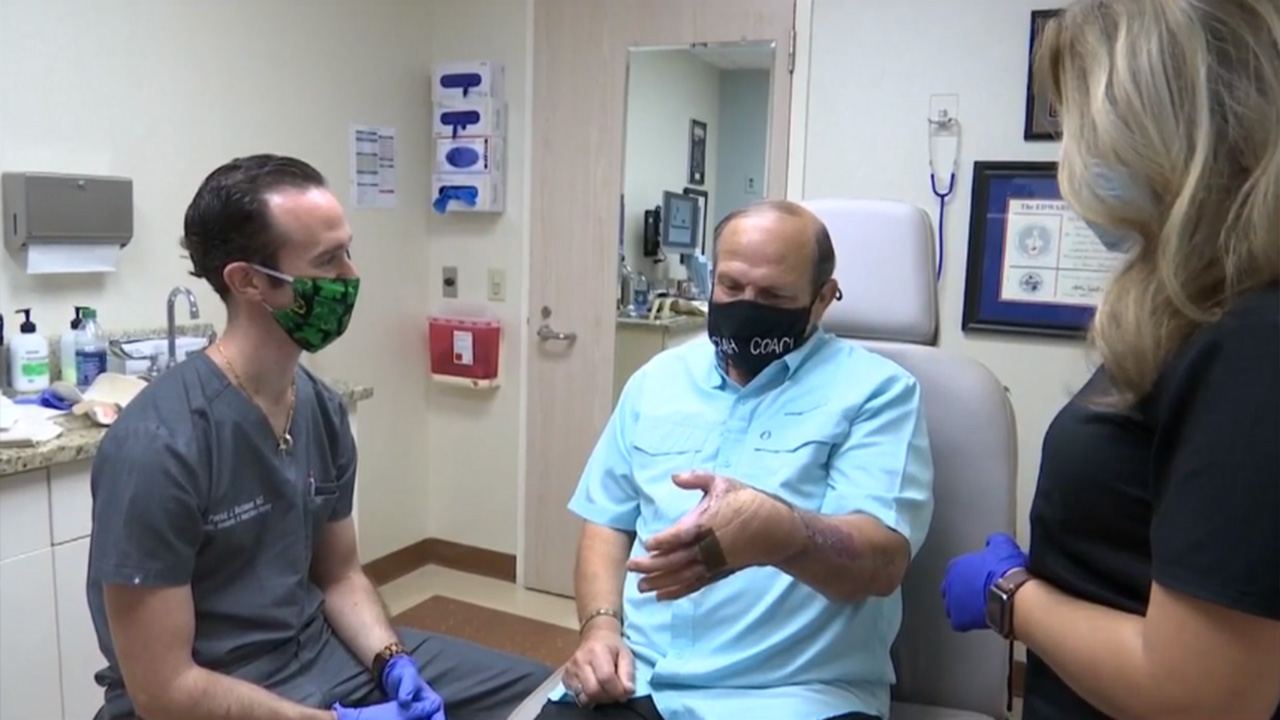
Dr. Greco in the News Discussing Kybella

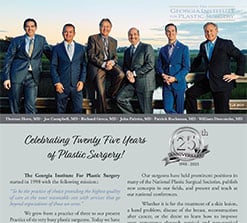
“Celebrating 25 Years of Plastic Surgery – December 2023″
We grew from a practice of three to our present Practice of six very busy plastic surgeons. Today we have 8 offices, 65 employees and a fully licensed Ambulatory Surgical center with 3 operating rooms.
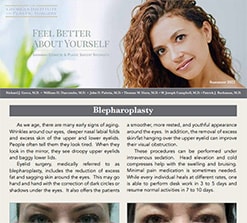
“Feel Better About Yourself – Summer 2022″
As we age, there are many signs of aging. Wrinkles around the eyes, deeper nasal labial folds and excess skin of the upper and lower eyelids. People often tell them they look tired. When they look in the mirror, they see droopy upper eyelids and baggy lower lids.
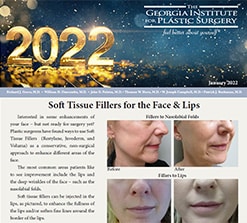
“Soft Tissue Fillers for the Face & Lips – January 2022″
Interested in some enhancements of your face – but not ready for surgery yet? Plastic surgeons have found ways to use Soft Tissue Fillers (Restylane, Juvederm, and Voluma) as a conservative, non-surgical approach to enhance different areas of the face.
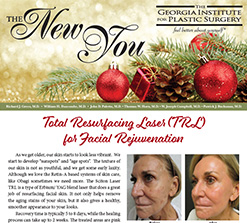
“The New You – Winter 2020″
As we get older, our skin starts to look less vibrant. We start to develop “sunspots” and “age spots”. The texture of our skin is not as youthful, and we get some early laxity. Although we love the Retin-A based systems of skin care, like Obagi sometimes we need more. The Sciton Laser TRL is a type of Erbium/ YAG blend laser that does a great job of resurfacing facial skin.
“The New You – Fall 2020″
The Georgia Institute For Plastic Surgery is committed to helping all patients in the Low Country and surrounding areas we serve. Each day, our practice sees cosmetic and skin cancer patients as well as covering local injuries and emergencies. Throughout the COVID-19 crisis we have remained open and continue to practice safe medicine and safe surgery by adhering to the following precautions.
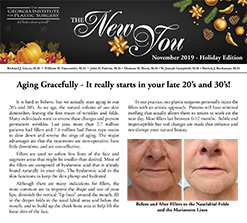
“The New You – Holiday Edition”
It is hard to believe, but we actually start aging in our 20’s and 30’s. As we age, the natural volume of our skin diminishes, leaving the first traces of wrinkles and folds.
Many individuals want to reverse these changes and prevent permanent wrinkles. Last year, more than 2.7 million patients had fillers and 7.4 million had Botox type toxins to slow down and reverse the sings of aging.
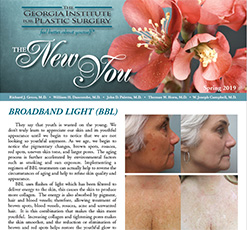
“BROADBAND LIGHT (BBL) – Spring 2019 Newsletter”
They say that youth is wasted on the young. We don’t truly learn to appreciate our skin and its youthful appearance until we begin to notice that we are not looking so youthful anymore. As we age, we begin to notice the pigmentary changes, brown spots, rosacea, red spots, uneven skin tone, and larger pores. The aging process is further accelerated by environmental factors such as smoking and sun exposure.
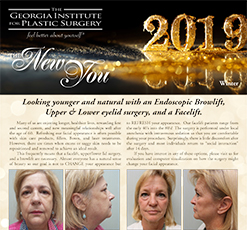
“Looking Natural and Younger – Winter 2019 Newsletter”
Many of us are enjoying longer, healthier lives, rewarding first and second careers, and new meaningful relationships well after the age of 60. Refreshing our facial appearance is often possible with skin care products, fillers, Botox, and laser treatments.
However, there are times when excess or saggy skin needs to be repositioned and removed to achieve an ideal result.
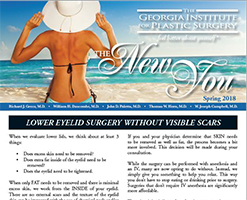
“Lower Eyelid Surgery Without Visible Scars – Spring 2018 Newsletter”
When we evaluate lower lids, we think about at least 3 things:
- Does excess skin need to be removed?
- Does extra fat inside of the eyelid need to be removed?
- Does the eyelid need to be tightened.
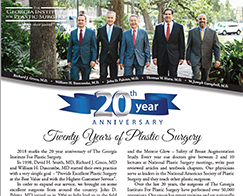
“20th year anniversary – Winter 2018 Newsletter”
2018 marks the 20 year anniversary of The Georgia Institute For Plastic Surgery.
In 1998, David H. Smith, MD, Richard J. Greco, MD and William H. Dascombe, MD started their own practice with a very simple goal – “Provide Excellent Plastic Surgery at the Best Value and with the Highest Customer Service”.
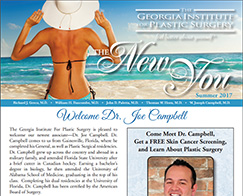
“Welcome Dr. Joe Campbell – Summer 2017 Newsletter”
The Georgia Institute For Plastic Surgery is pleased to welcome our newest associate—Dr. Joe Campbell. Dr. Campbell comes to us from Gainesville, Florida, where he completed his General, as well as Plastic Surgical residencies.
“Help Us #TURNITPINK Again – Fall 2016 Newsletter”
In 2014, we turned the Forsyth Fountain pink; now, we are turning the month of October pink to bring awareness to our friends, family, and patients who suffered from the diagnosis of breast cancer.
“Introducing the Sciton Laser! – Spring 2016 Newsletter”
Is it time for your New Year’s Resolutions? If it involves looking as young as you feel or just improving the contour of your breast or body – we are here to help you. The surgeons of The Georgia Institute For Plastic Surgery offer each patient excellence in surgical skill.

“The New You – Holiday 2015 Newsletter”
This summer, The Georgia Institute will be adding the exciting new Sciton Laser Platform to address multiple skin related problems. This laser is capable of improving and correcting several different skin issues.
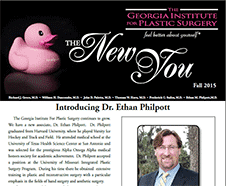 “The New You – Fall 2015 Newsletter”
The Georgia Institute For Plastic Surgery continues to grow. We have a new associate, Dr. Ethan Philpott. Dr. Philpott graduated from Harvard University, where he played Varsity Ice Hockey and Track and Field.
“The New You – Summer 2015 Newsletter”
Do you feel that your eyes look tired? There are three causes for this – excess skin of the upper eyelids, browptosis, and occasionally a droopy eyelid. If the problem is excess skin of the eyelid one can have it removed with a Blepharoplasty. Patients with Brow Ptosis do well with a Browlift.
“The New You – Holiday 2014 Newsletter”
On September 30, 2014, on the eve of Breast Cancer Awareness Month, over 700 people joined the Georgia Institute For Plastic Surgery for this truly historic event.It was inspiring to see the large number of patients that we’ve worked with over the last 21 years come out to show their support.
“The New You – Fall 2014 Newsletter”
The Georgia Institute For Plastic Surgery is celebrating breast cancer patients’ Survivorship by Turning the Forsyth Park Fountain Pink on Tuesday, September 30, 2014 at 5:30 PM. We will be joined by hundreds of Survivors and their families.
“Growing Old Gracefully – The Secrets of a Plastic Surgeon” By: Richard J. Greco, M.D.
The average lifespan in America is now 79, and many of us are living well into our 80’s and 90’s. Today, sixty in the new “50”. Everyone is living longer, working longer, and enjoying second and sometimes third relationships.

“The New You – Winter 2014 Newsletter”
Have you made your “New Years Resolutions” yet? Every year each of us has the opportunity to evaluate all the things that we can do to improve one’s health and one’s life.
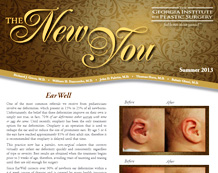
“The New You – Summer 2013 Newsletter”
Featured in the Summer 2013 Newsletter; EarWell Otoplasty, Abdominoplasty Around the World, Chemical Peels, Rhinoplasty, and Gynecomastia.
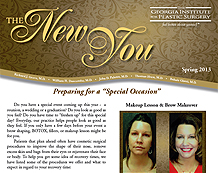
“Preparing for a Special Occasion “
Do you have a special event coming up this year – a reunion, a wedding or a graduation? Do you look as good as you feel? Do you have time to “freshen up” for this special day? Everyday, our practice helps people look as good as they feel.
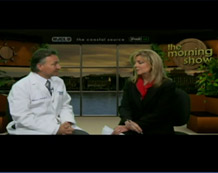
“Number of Male Facelifts Rising”
Dr. Richard Greco discusses how the number of men recieving plastic surgery is increasing The Morning Show
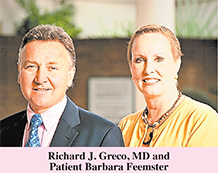
“How we help our patients “deal” with the aftermath of Breast Cancer”.
Dr. Greco explains how The Georgia Institute For Plastic Surgery helps those affected by breast cancer.
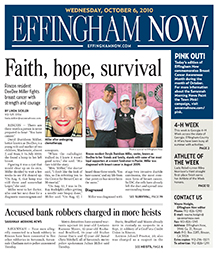
As seen in Effingham Now, October, 2010; “Faith, hope, survival”.
Dr. Greco helps a breast cancer patient.

As seen in Cosmopolitan Magazine, March, 2003; “Breast Check: Saline Implant Snags”.
Dr. Greco provides solutions to some common issues surrounding saline breast implants.

As seen in Oprah Magazine, January, 2003; “Face Lifts: The Good, The Bad And The Ugly”.
Editorial writer Christine Fellingham explores the world of nipping, tucking, hoping and praying.
In outlining the pros and cons of facial surgery, Ms. Fellingham consults with Dr. Greco on patients readiness to undertake surgery.

As seen in Vogue Magazine, August, 2002; “Face Forward”.
Editorial writer Lynn Snowden Picket reports on the latest advances in facial surgery and asks the question, “Are we fast approaching an ageless society?”.
Dr. Greco weighs in on new procedures and the future of plastic surgery including the growth of stem cells to replace old or damaged tissue.
As seen in More Magazine, November 2001; “When Implants Wear Out”.
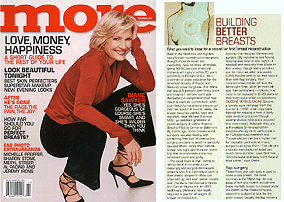
BUILDING BETTER BREASTS By Julia Califano
“Back in the Seventies and Eighties, many breast-reconstruction surgeons thought implants would last indefinitely. Now we know otherwise. Some 10-50 percent of silicone implants will rupture within 20 years, according to Richard Greco, M.D., chairman of public education for the American Society of Plastic
Surgeons. (For saline, the rate is 5 percent over three years and roughly 1 percent each year thereafter.) … Silicone implants were removed from the market in 1992, when they were blamed for a host of body-wide medical problems (though several studies have since disputed this connection). However, they are still available to reconstruction patients who agree to participate in an FDA-approved research trial. Though silicone carries a higher risk for capsular contracture, many surgeons endorse them. ‘The silicone implants manufactured today are much more durable,’ says Shermak. ‘Silicone looks and feels more natural than saline,’ says Greco.”
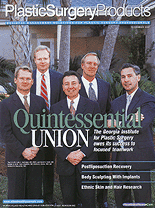
As seen in Plastic Surgery Products Magazine, November 2001; “Quintessential Union”.
Quitessential Union
By Rich Smith
“With five plastic surgeons on the team, The Georgia Institute For Plastic Surgery offers an array of services that would be difficult, if not impossible, for solo practitioners and smaller groups to manage. For example, the group offers a novel treatment delivery methodology known as Quick Stitch.
“Quick Stitch – targeted to family physicians and industrial medicine providers – allows patients with fresh lacerations to avoid the hospital emergency room. At the Institute, one of the group’s five partners is available during weekday business hours to promptly sew up such injuries.
“…The Georgia Institute For Plastic Surgery is one of three Savannah-area medical practices with its own ambulatory surgery center. The 12,000-sq-ft facility is Medicare-approved and has been accredited by the American Association for the Accreditation of Ambulatory Surgical Facilities (AAAASF).
” ‘It is state-of-the-art, and equipped to perform minor procedures as well as most cosmetic operations,’ says senior partner David H. Smith, MD. ‘We also have a 23-hour unit with skilled plastic surgery nurses available for postoperative care, if necessary.’
“In addition, the institute offers aesthetic services ranging from facials to waxing, provided by a full-time licensed aesthetician. Other ancillary services include Endermologie treatments and laser hair removal.
” ‘We have geared everything to our patients,’ Smith says. ‘Our philosophy is to lavish our patients with courtesy and consideration in the extreme, but we make no distinction between the patients who come to us for a cosmetic procedure as opposed to a reconstruction.’ “
As seen in Care Magazine, October of 2001; “Surviving Breast Cancer Surgery – A Positive Look at Reconstructive Techniques and Emotional Recovery”.
By Richard J. Greco, M.D.
“Could you imagine the loss of a part of your body? Now add in the loss of an important part of your sexuality – sounds almost too impossible to even think about, yet that is what thousands of women have had to contemplate when the diagnosis of breast cancer is made. Of course curing the cancer is the first priority, but if it could be done while preserving the breast or recreating a breast at the same time – wouldn’t that be even better?
“That thought has driven surgeons to develop breast conserving techniques for women with small tumors and breast reconstructive techniques for women who still require mastectomies.
“…Women who require the removal of the entire breast because of the size of the tumor, fear of re-occurence, or because the patient wishes to avoid radiation therapy, often opt for an immediate breast reconstruction. This requires that the general and plastic surgeon coordinate their schedules so that the reconstruction is done at the same time that the breast is removed. ‘The advantage is that the patient can wake up with a breast. The patients are definitely less depressed about having lost their breast to cancer when they have a reconstructed breast to wake up to,’ says Dr. Richard Greco (a Savannah Plastic Surgeon).
“Breast reconstruction can be performed with the use of saline or silicone implants, or more commonly with tissue from another part of the woman’s body. ‘I prefer using the extra skin and fat of the abdomen – based on the blood supply of one of the muscles to create the reconstructed breast (TRAM Flap). A soft, natural breast is created and the women gets a tummy tuck at the same time. Our patients are in the hospital for 2-3 days after surgery and back to most activities in 2-4 weeks,’ says Dr. Greco. ‘The satisfaction rate among patients is extremely high.’ “
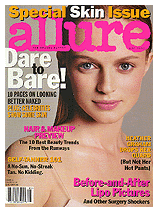
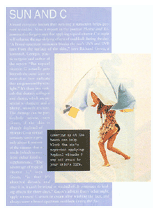
As seen in Allure Magazine, May of 2000; “Body News – Sun and C”.
SUN AND C
By Dianne Partie Lange
“Almost everyone knows that wearing a sunscreen helps prevent wrinkles. Now a report in the journal Plastic and Reconstructive Surgery says that applying topical vitamin C at night will enhance age-defying effects of sunblock during the day. ‘A broad-spectrum sunscreen blocks the sun’s UVA and UVB rays from the surface of the skin,’ says Richard Greco, a Savannah, Georgia, plastic surgeon and author of the report. ‘But topical vitamin C actually gets beneath the outer layer to neutralize free radicals that are generated by sunlight.’ It’s these free radicals that destroy collagen and elastin, which are essential to elasticity and a plump, smooth texture. The damage can be particularly severe, says Greco, if the skin is already depleted of vitamin C – a virtual certainty since it gets only about 8 percent of the vitamin that it needs (which comes from food or other supplements). ‘The advantage of a topical vitamin C,’ says Greco, ‘is that it’s absorbed directly, and once it is, it can’t be wiped or washed off. It continues its healing effects for three days.’ Greco’s advice: Every other night, apply a topical C serum or cream after washing the face, and always wear a broad-spectrum sunblock during the day.”
Before & After Gallery
Our talented plastic surgeons offer a wide range of cosmetic procedures designed to improve the appearance of the face, body and breasts. Options include the following:
Refine Your Search
Select a procedure to begin your search.